60 Black House Seats: Midterm Wins Narrow Projected Loss
Democratic gains in the South prevented a steeper decline in Black representation following a Supreme Court ruling that weakened voting rights protections.
By Sanjay Caldwell ·
The incoming U.S. House of Representatives will include 60 Black members, a number that stands one seat above the historical low set after the 1876 election. This count represents a decrease from the 63 Black representatives currently serving but avoids a projected drop that experts feared would reach record lows following this year's Supreme Court decision on the Voting Rights Act.
The reduction in seats stems from mid-decade redistricting and standard political turnover, including retirements and candidates moving to higher offices. However, strong electoral performance in Southern states limited the damage. Black Democrats held key seats despite new maps that had been drawn to favor Republican candidates.
Rep. Shomari Figures of Alabama retained his seat despite state Republican leaders redrawing his district to heavily favor their party. A lower federal court had previously described the new map as tainted by intentional race-based discrimination. Figures' reelection was attributed to high voter engagement among Black communities, a trend observed across multiple states.
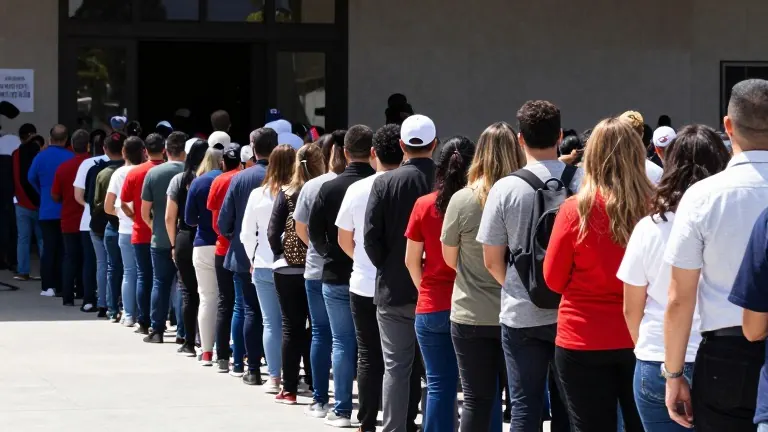
Cliff Albright, co-founder of Black Voters Matter, characterized the results as a Black wave rather than a general blue wave. He stated that the electorate was motivated by attacks on voting rights and gerrymandering. High turnout helped Black Democrats overcome hurdles in Texas and Florida, where some districts represented by Black members were eliminated.
In North Carolina, Rep. Don Davis defended his seat after the state legislature redrew his district. Two other incoming Black Democrats, Cyril Jefferson and LaKesha Womack, won districts previously held by white Republicans. Melat Kiros in Colorado and Donavan McKinney in Michigan also secured seats as part of the incoming class.
Democrats broke the Republican trifecta in Georgia, a shift that reduced immediate redistricting threats for the state's Black congressional representatives. Outgoing Governor Brian Kemp announced he would not call a special session on redistricting before Governor-elect Keisha Lance Bottoms takes office in January. Bottoms will become the first Black woman elected to that position.
Experts warn that current gains may not be sustainable in future cycles. Albright questioned whether Black voters could continue to overcome diluted voting power without similar economic conditions or high white voter turnout for Democrats. Kareem Crayton of the Brennan Center for Justice advised caution, comparing the current optimism to the post-2008 period when many gains were reversed. He suggested crafting rules to protect rights under worst-case scenarios.
Dedrick Asante-Muhammad of the Joint Center for Political and Economic Studies noted that the full impact of the Supreme Court ruling is likely to be felt in 2028 and 2030. Janai Nelson of the Legal Defense Fund added that effects will extend to state legislatures, city councils, and school boards. Black Senate representation has risen to a historic high of seven, including Scott Colom of Mississippi, the first Black senator from that state since Reconstruction.
More Politics · National news · Report a business · Got a Story?