Montana Beekeepers Face Costly Climate Shifts
A warm winter, spring freeze, and drought have driven up operating costs for local apiaries, forcing price hikes and long-distance hive relocations.
By Takeshi Faure ·
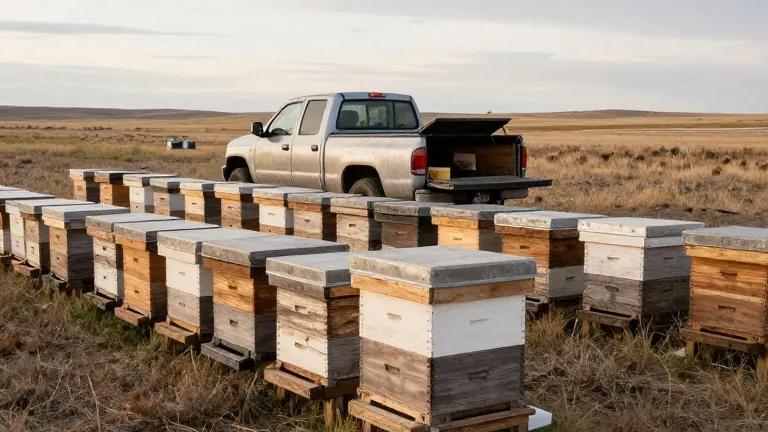
Patty Sundberg stands near her hives in Joliet, Montana, looking at a ledger that shows a gap of nearly half a million dollars.
The owner of Columbus-based Sunshine Apiary estimates her losses at $500,000 for the current year. She attributes the deficit to a sequence of weather events that disrupted the natural food cycle for her bees.
An unusually warm winter caused flowers to bud early. A subsequent spring freeze killed many of those blooms, and a following drought limited the remaining sources of pollen. Sundberg noted that hot, dry winds further stressed the plants, reducing the protein source her bees rely on.
To survive, Sundberg moved more than 3,000 hives to North and South Dakota. This relocation added fuel and labor costs during a period of high prices. It marks the second time in her 40 years of operation that she has moved her bees during the summer.
Similar pressures are hitting nearby operations. Spencer Drange, manager of Drange Apiary in Laurel, moved about 2,000 hives from Broadview to Hysham in June. That trip covered more than 100 miles using small trucks, a process Drange described as expensive and a major drain on profits.
The rising costs forced Drange Apiary to raise honey prices by 20 percent. It is the first increase in seven years for that business. Drange said nearly every operator he has spoken with has raised prices this year.
Sundberg and Drange are urging consumers to buy U.S.-produced honey. The USDA reports that 82 percent of honey used in the United States is imported from countries including India, Argentina, Vietnam, Brazil, and Ukraine. That figure was 71 percent ten years ago. Sundberg said she remains optimistic because she believes tomorrow will be better.
More Business · Customer Complaints · Report a business · Got a Story?