Breaking: RTX Pro 6000 Economics Reveal Anthropic IPO Risk
The ten month payback period for heavy users highlights the gap between massive compute costs and the projected valuation.
By Sanjay Caldwell ·
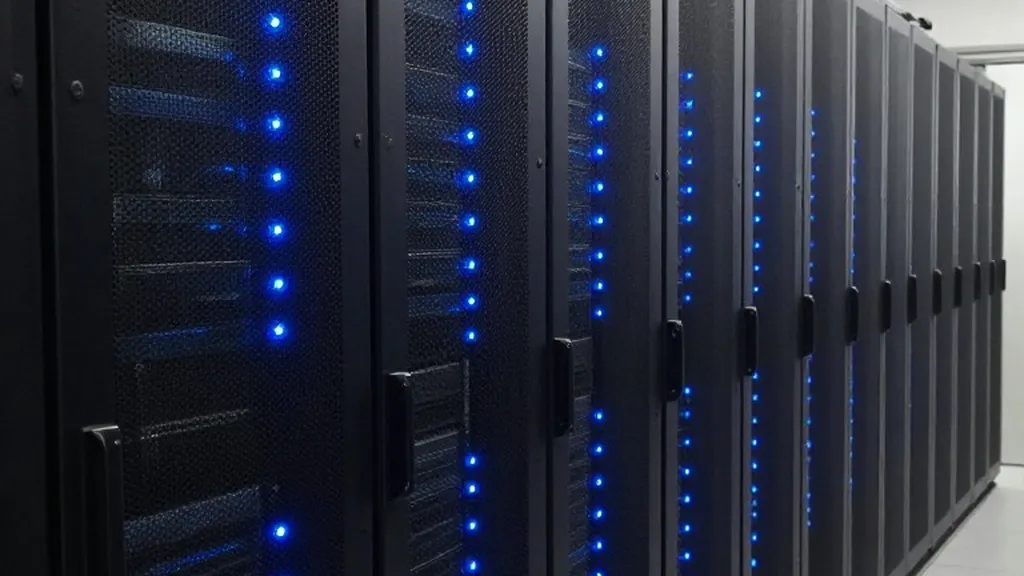
Anthropic is preparing to go public with an initial offering that projects a valuation between 2.5 trillion dollars and 3 trillion dollars. This figure stands in stark contrast to the company’s current financial reality. The maker of the Claude models reports annual revenue of less than 20 billion dollars while carrying a deficit of about 500 billion dollars. The company also holds compute commitments to other firms, including Amazon and Google, that total up to 900 billion dollars. This financial structure creates a central question for investors. How can a company that loses 500 billion dollars be worth 2.5 to 3 trillion dollars. The answer lies in the high cost of the hardware required to serve the models.
The cost of serving users is driven by the price of graphics processing units. A single Nvidia RTX Pro 6000 card retails for 20,000 dollars as of now. This price does not include the servers, switches, central processing units, or the data center facility costs and electricity needed to run the machines. However, buying the cards directly from Nvidia at a wholesale price of 3,000 to 4,000 dollars changes the calculation for owners. The GPU alone takes about 10 months of revenue from a heavy user to pay back. This user pays 200 dollars a month for the max plan.
The capacity of one RTX Pro 6000 card is limited by the type of user. The card can hold about 15 to 20 light users running light compute at about 60 to 70 tokens per second. Alternatively, it can serve 1 to 2 heavy coding users running Claude Code at about 40 to 50 tokens per second. These figures assume constant use for 24 hours a day. Most light users will not use the chat for more than a few hours a day, so the bandwidth number can stretch 10 times. Despite this stretch, the acquisition cost and breakeven period remain significant barriers for smaller operators.
The 10 month payback period is a critical metric for understanding the economics of AI infrastructure. It applies to the heavy user at 200 dollars a month and is roughly the same for the 15 to 20 light users who pay about 20 dollars a month on average. The compute and GPU bottleneck is a real problem for these companies, and Nvidia knows it. The chip maker drives demand up and lowers supply, giving all its supply to the large players like Anthropic, Grok, and OpenAI. The consumer market is left fitting the bill for the infrastructure that powers the models.
Nvidia agreed to acquire Hugging Face, the platform where most open AI models are distributed, for 12.9 billion dollars. Hugging Face makes about 150 to 200 million dollars a year in its peak years, making the 12.9 billion dollar price about 70 times its revenue. The stated reason for the deal was CUDA, the software that runs all these models. The deeper reason was control of the distribution of models on the market, especially the open source market. This acquisition allows Nvidia to influence which models are available to the public.
The open source market has been flooded by advanced Chinese models, including Kimi from Moonshot AI, DeepSeek, Qwen from Alibaba, and models from Xiaomi. These companies are willing to give the models over to the public to increase innovation. Kimi K3 started to outperform the Opus 5 models from Anthropic, and it was given to the public. The internet used these large language models, quantized them down, and made them usable on smaller machines like Mac Studios, A100 cards, and RTX Nvidia models. This trend threatened the proprietary advantage of larger AI companies.
After Nvidia acquired Hugging Face, advanced models were deleted from distribution. Anything over a quant 4, meaning advanced and capable of beating out Claude's models, was removed. The 4 bit, 6 bit, 8 bit, and 16 bit full sized models were banned from the Hugging Face platform. Developers on Discord rallied to stop the censorship and corporate overreach. They opened Pirate Face, a place where you can upload and download all models. This happened after the large 400 gigabyte models at quant 3 and higher were scrubbed from the network.
Anthropic demanded that Congress ban Chinese models because of national security, when the real goal was to control the market. The company recently did a publicity stunt by releasing and circulating media that AI will take over the world. This occurred when one of its disgruntled employees, Jacob Coxon, quit amidst his disappointment in AI. The goal was to get the government to pass bills banning models that were a huge threat to Anthropic's bottom line. The panic worked, and Congress passed a bill that now bans any government and its affiliates from using any Chinese models.
Anthropic is also trying to pass bills that would stop other companies like Verizon and other networks from launching their own AI models in house by using these advanced open source models. In June 2026, Anthropic released Fable 5 and Mythos 5 on June 9. The U.S. Department of Commerce issued an export control directive, and Anthropic suspended access to them worldwide on June 12. The models were solving too many problems, and Anthropic pulled them off the shelf. This was not about winning the AI race, but about controlling the AI race.
In recent months, Anthropic has been suspending users with reasons like abuse, potential fraud, and usage violations. The appeal process is fully run by bots, and as soon as they kick you off, they will not reactivate the account. Once Anthropic goes public, the suspensions will multiply 100 times or 1000 times because it will have deep pockets and access to unlimited funds. The end user will not be important to them. Anthropic does not make money off of daily users, and it sure as heck does not make money off of heavy users. The company will likely create programs where all your ideas and data will belong to them.