Democrats seize control of both chambers in historic midterm sweep
With a net gain of 43 House seats and seven Senate seats, Democrats will control Congress in January, positioning themselves to check the administration immediately.
By Sanjay Caldwell ·
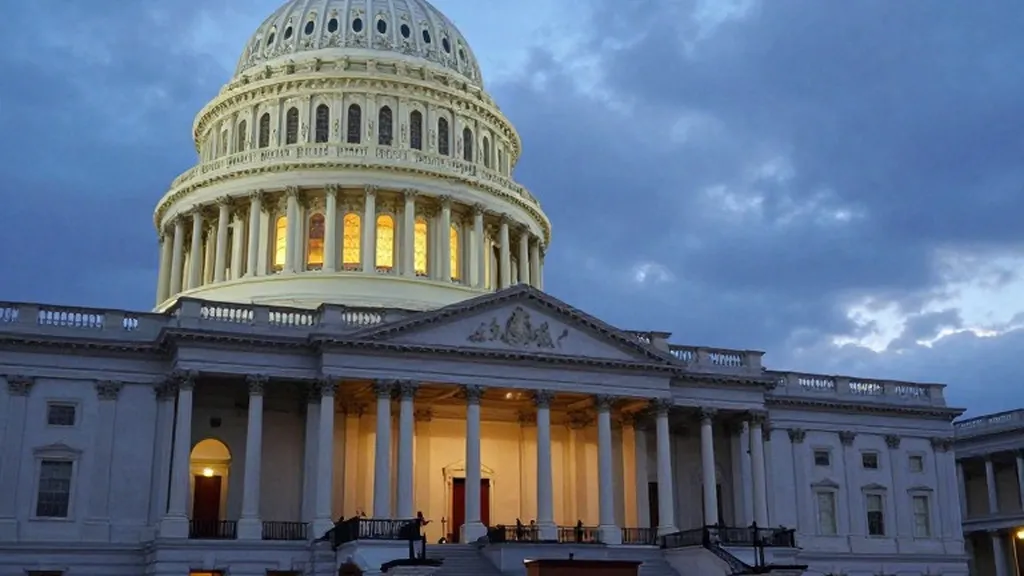
Democrats have secured majorities in both the United States House and Senate following the November 3, 2026, midterm elections. According to final tallies reported by Ballotpedia, the party picked up at least 43 House seats and seven Senate seats. This shift grants Democrats a projected 250 to 157 majority in the House and a 54 to 44 majority in the Senate. The results mark a significant rebalancing of power in Washington, placing the party in a position to lead oversight and legislative efforts for the next two years.
The net loss of at least seven Senate seats for the Republican Party places this election cycle in the top 20 percent of historical midterm years in terms of seat swings against the president’s party. Ballotpedia defines this threshold as a wave election. While the House result of 42 net losses is slightly below the 48-seat mark typically associated with a wave, the combined control of both chambers signals a strong mandate for the opposition party. Uncalled races may still adjust these totals, but the current trajectory is clear.
For Democratic leaders, the immediate priority is establishing oversight mechanisms to scrutinize the current administration. Rep. Bobby Scott of Virginia, the top Democrat on the House Committee on Education and the Workforce, stated he plans to leave no rock unturned in using the panel’s investigative powers. He intends to issue subpoenas and hold hearings to examine the dismantling of the U.S. Education Department. Scott sent a letter to ten federal agencies one day after the election, reminding them to preserve records that could become part of a congressional review.
Senate Majority Leader-elect Chuck Schumer has already endorsed a push to impeach Defense Secretary Pete Hegseth. Schumer stated that Hegseth must stand trial before the Senate. This move follows the introduction of an impeachment resolution by Rep. Thomas Massie of Kentucky, a Republican who argued that Hegseth’s actions in the Iran war amounted to high crimes and misdemeanors. House Democratic Leader Hakeem Jeffries supports the measure, and with Democrats now holding the majority, the path to a House vote is clearer than before the election.
The shift in power also affects the administration’s ability to pass legislative initiatives. With a Democratic Senate, it becomes more difficult for the president to advance bills that require a simple majority. Furthermore, the new House majority allows Democrats to use appropriations as a leverage point. Sen. Chris Van Hollen of Maryland, who serves on the Appropriations Committee, noted that Democrats are exploring adding conditions to spending bills to rein in the administration’s education agenda. He described this as a way to stop the bleeding and prevent further damage to federal programs.
The election results also reflect a broader trend in state politics. Democrats won a majority of governorships and a plurality of state government trifectas for the first time since before the 2010 elections. In California, Xavier Becerra won the governor’s race, becoming the state’s first elected Latino governor. His victory extends a streak of five consecutive Catholic governors in the state. The AP Voter Poll indicated that about 6 in 10 Catholic voters in California supported Becerra, highlighting the complex voting patterns within religious demographics.
President Donald Trump acknowledged the election results but maintained a confident stance regarding his relationship with key figures in the administration. During a White House briefing, he discussed the FBI’s investigation into Nvidia CEO Jensen Huang’s affair with an alleged Chinese spy. Trump suggested that Huang should not worry, stating that he believes Huang is in good shape. This comment came amid broader concerns about national security and the geopolitical implications of the alleged espionage.
The new congressional majority will also face challenges in redistricting and maintaining cohesion. Republicans had previously used redistricting to maintain power in certain districts, but the scale of this year’s loss suggests that those advantages were not sufficient to prevent a shift in control. Democrats will now have the opportunity to shape the legislative agenda for the next two years, focusing on cost of living issues, health care, and oversight of the Iran war. The party’s ability to unite behind a common platform will be tested as they transition from opposition to majority status.
As the new Congress prepares to convene in January, the focus will shift from campaigning to governance. The Democratic leadership has signaled an intent to use their new powers aggressively, particularly in areas where the administration has faced criticism. The combination of a strong House majority and a Senate majority provides a robust framework for legislative action. The coming months will reveal how effectively the party can translate its electoral victory into policy changes and meaningful oversight.
The election results stand as a definitive statement from voters who sought a change in the balance of power. With control of both chambers, Democrats are poised to challenge the administration on a wide range of issues. The next two years will be defined by the extent to which they can leverage their majority to pass legislation, fund programs, and hold the executive branch accountable. The stage is set for a new era in congressional politics.