Google Chips Enter Meta Production With New PyTorch Integration
A new software bridge allows Google's AI hardware to run in Meta's data centers, marking the first time TPUs are sold to external customers in a production role.
By Sofia Ramirez ·
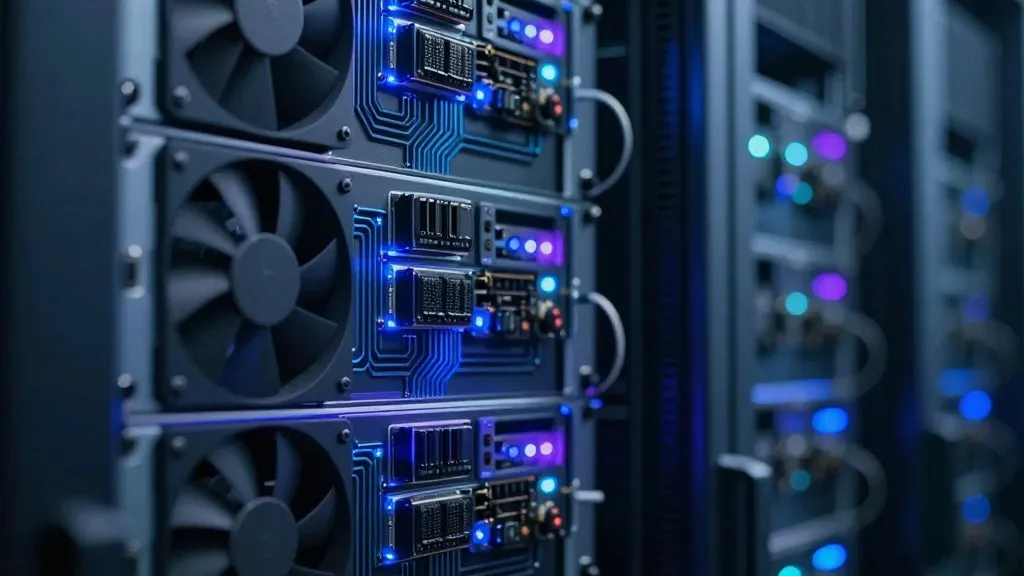
Google’s custom AI chips are now running in production environments at Meta, a significant milestone that marks the first time these tensor processing units, or TPUs, have been sold to an external customer for real world use. This development, announced on Google’s developer blog, comes through a new version of the SGLang inference engine that is natively integrated with PyTorch. A matching open source version of vLLM, another popular inference engine, was also released simultaneously. These updates remove the previous requirement for companies to rewrite their code to use Google’s proprietary JAX framework, making the hardware a native option for the PyTorch ecosystem without major structural changes.
The primary driver for this shift is the desire to break free from a single hardware dependency. Zongwei Zhou, Meta’s lead for PyTorch on TPU, confirmed that the new SGLang-TorchTPU stack is already live in production at Meta. He described the effort as a close three way collaboration between Meta, Google, and the SGLang team. That team operates at RadixArk, a startup founded by the creators of the SGLang engine. According to Zhou, this partnership has delivered a remarkably mature serving stack that runs on PyTorch natively.
Jana van Greunen, a director of PyTorch engineering at Meta, emphasized the strategic importance of this move. She noted that Meta cannot be constrained by a single hardware architecture. The new TorchTPU system enables the company to deploy its existing PyTorch workloads directly onto Google’s chips. Google stated that it co developed this integration with Meta’s PyTorch team, highlighting a shared effort to streamline the software layer between the two giants.
This is not the first time Meta has experimented with Google’s silicon, but the previous efforts were less direct. Google describes PyTorch/XLA, an older bridge from PyTorch to TPUs, as the predecessor to the new TorchTPU. Reports from SemiAnalysis indicated last year that Meta research teams used TPUs through this older bridge from 2020 to 2023 before those contracts were canceled. The current push was aimed squarely at Meta, which had resisted migrating its entire stack to Google’s JAX framework.
The logistical details of where these chips are physically located remain somewhat opaque. However, talks last year reportedly involved Google Cloud TPU rentals for 2026, with purchases expected in 2027. Meta later signed a multi year rental agreement, which likely underpins the current production deployment. This arrangement allows Meta to leverage the hardware without an immediate full purchase, a common strategy in the current AI infrastructure market.
The timing of this announcement is particularly noteworthy. It came one day after Amazon revealed that it is open sourcing TorchNeuron, its own native PyTorch backend for its Trainium2 and Trainium3 chips. Both moves appear designed to loosen the software lock in that has historically favored Nvidia. By making their chips compatible with the dominant PyTorch framework, both Google and Amazon are trying to make their hardware more attractive to developers who do not want to rewrite their codebases.
Performance metrics suggest that these chips can compete with Nvidia’s offerings. A tuned vLLM setup serving the Kimi K3 model, which has 2.8 trillion parameters, reportedly exceeded 700 tokens per second for a single user on the seventh generation Ironwood TPU. This figure comes from Inferact, a startup founded by vLLM’s creators. The test used 16 Ironwood chips with speculative decoding, a technique that speeds up inference using a small draft model. In comparison, a published setup using 16 Nvidia GB200 chips reached 452 tokens per second.
Beyond raw speed, efficiency gains are evident in smaller batch scenarios. Kernels for the Kimi K3 and Qwen 3.8 27B models deliver roughly 1.4 to 2 times the throughput of the GB200 baseline at small batch sizes when speculative decoding is not used. SGLang-TorchTPU will continue to expand its model support, starting with DeepSeek V4.1 Flash and Reflection Beam. The team is also working toward day zero TPU support for new open models, aiming to have compatibility ready on release day by the first quarter of 2027.
More details about the collaboration are expected at the SGLang Summit 2026, scheduled for November 12 and 13 in San Francisco. Google, Meta, and RadixArk plan to share further insights into how this integration works and what it means for the future of AI hardware. For the Pacific Northwest and other tech hubs, this signals a more fragmented and competitive landscape for AI infrastructure, giving developers more choices than ever before.
Source: Tom's Hardware