Mozart's 'Figaro' drew just nine shows in 1786 before becoming a staple
WRTI will broadcast a 2025 Academy of Vocal Arts production of the opera on Nov. 7, featuring a costume design that visually maps social class.
By Sanjay Caldwell ·
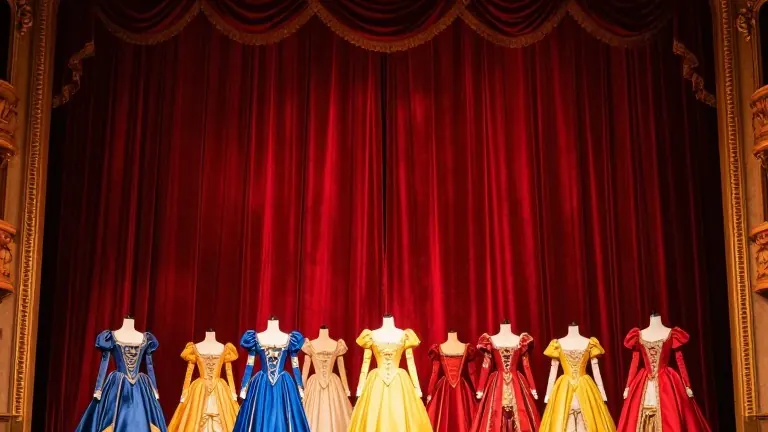
Wolfgang Amadeus Mozart's The Marriage of Figaro premiered in 1786 with a run of just nine performances. The opera has since become one of the most frequently staged works in the world. WRTI will broadcast a 2025 performance by the Academy of Vocal Arts on Saturday, Nov. 7, at 1 p.m.
The piece marks the first of three operas Mozart wrote with Italian librettist Lorenzo Da Ponte. Only Don Giovanni, the second in that series, rivals Figaro in terms of critical standing. The work is adapted from a play by Pierre Beaumarchais, which serves as a sequel to The Barber of Seville.
The original play was banned in Vienna because the Austrian Emperor feared its themes would spark class conflict. Mozart and Da Ponte altered the source material for the stage. They shifted much of the narrative blame from the aristocracy to female characters. This change created a surface level story, but the underlying class tensions remained intact.
Stage director Tara Faircloth described the opera's endurance as a result of Mozart's focus on human frailty. She noted that the characters constantly misunderstand one another and cause harm, yet they deeply desire connection. Faircloth stated that the work explores how people long for community despite their flaws.
The Academy of Vocal Arts production uses a brightly colored costume palette. The design relies on specific hues to distinguish noble characters from servants. Different ranks of staff wore distinct colors. When characters swapped outfits, the audience could observe how their speech and treatment changed based on their perceived social status.
Cumhur Görgün, who played Figaro, and Jasmine Rose, who played Susanna, discussed the color choices and the production's exploration of class dynamics. An abridged version of their conversation will air during the intermission. The full discussion is available for streaming.
Listeners can catch the broadcast on WRTI at 1 p.m. on Nov. 7. The performance is also available via the WRTI website, the mobile app, and smart speakers. Joseph Colaneri conducts the orchestra. The cast includes Joshua Klein as Count Almaviva, Alexa Frankian as Countess Rosina Almaviva, and Katherine Dobbs as Cherubino.