2028: The New Deadline for a Lunar Surface Return
NASA has finalized a revised roadmap that moves critical docking maneuvers closer to Earth and eliminates complex refueling steps to accelerate the timeline.
By Ananya Gupta ·
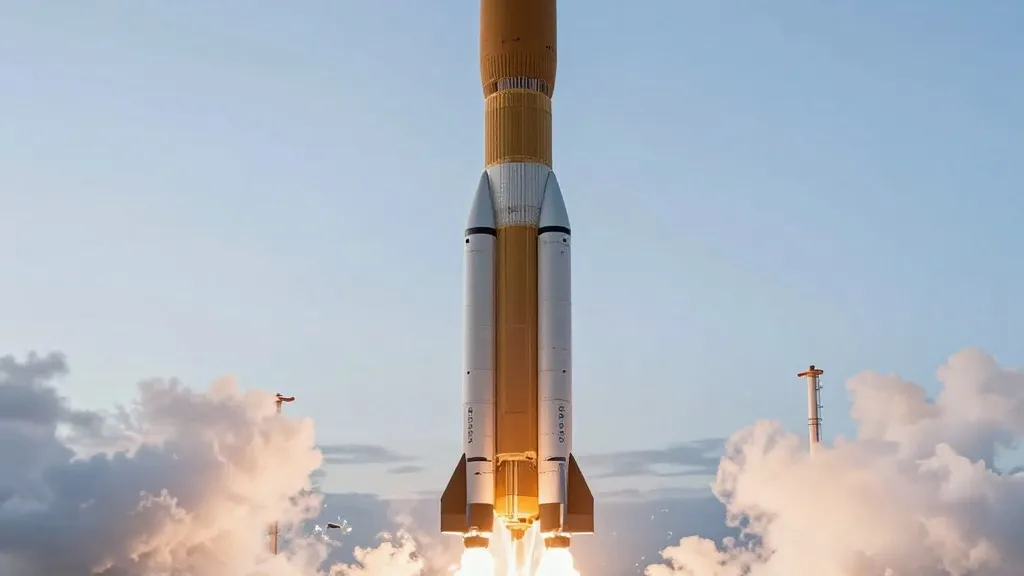
A significant architectural shift has officially reshaped the path to the Moon, as NASA confirmed on Friday that it is moving key docking operations out of the perilous deep-space environment and back to the relative safety of high-Earth orbit. This strategic pivot resolves a long-standing technical bottleneck that had threatened to delay the agency’s most ambitious human spaceflight initiative in decades. By redefining where spacecraft meet and exchange cargo, the administration has set a firmer trajectory toward bringing astronauts back to the lunar surface as early as 2028.
The new framework centers on two distinct commercial pathways, each with its own mechanical demands. For SpaceX, the Starship lunar lander will now dock with the Orion crew capsule in high-Earth orbit before the combined vehicle travels to the Moon. This change eliminates the need for a complex rendezvous in a near-rectilinear halo orbit, a maneuver that required excessive energy and posed significant engineering challenges. For Blue Origin, the plan relies on four separate launches of the New Glenn rocket, bypassing the need for in-space refueling between spacecraft. Their Blue Moon lander may still rendezvous with Orion, but this would occur in low-Lunar orbit rather than deep space.
NASA Administrator Jared Isaacman emphasized that the agency is committed to this accelerated schedule. Speaking during the lengthy news conference, he stated, “This is an achievable path we are on right now. We have the mandate, we have the resources, and the support from our stakeholders to be able to execute, and that’s what we intend to do.” The administration’s confidence stems from a comprehensive review of every program element, aimed at removing obstacles for the private partners responsible for building the landers.
The timeline remains aggressive, with specific milestones already locked in. NASA officials indicated that the Artemis III mission, which serves as a demonstration of docking capabilities near Earth using both the Blue Moon and Starship vehicles, is still targeted for a launch in the summer of 2027. Following that, the Artemis IV mission, which will mark the first actual crewed landing on the lunar surface under this new architecture, is scheduled for 2028. These dates represent a clear push to maintain momentum without sacrificing the technical integrity of the operations.
The revision also addresses a major logistical hurdle for SpaceX engineers. In early 2026, the company’s primary request to NASA was the removal of the requirement to dock in the challenging halo orbit. When the agency canceled the Lunar Gateway project earlier this year, it inadvertently solved this problem for SpaceX by removing the infrastructure that had dictated that specific orbital path. This alignment of internal agency strategy with external commercial needs has streamlined the development process for the Starship vehicle.
For readers in the Pacific Northwest, the stakes are high not just for science, but for the industrial complex that supports these missions. The success of this revised plan hinges on the ability of both SpaceX and Blue Origin to meet their respective delivery windows. If the 2028 target holds, it will validate a more efficient, Earth-centric approach to lunar logistics. If it slips, the consequences could ripple through the entire Artemis Program, potentially pushing the next era of human exploration further into the next decade.
Source: Ars Technica