NASA reveals high lunar launch count
Officials now estimate twenty-two rocket flights are needed to refuel the lunar lander, a figure that complicates the Artemis timeline.
By Rahul Mehta ·
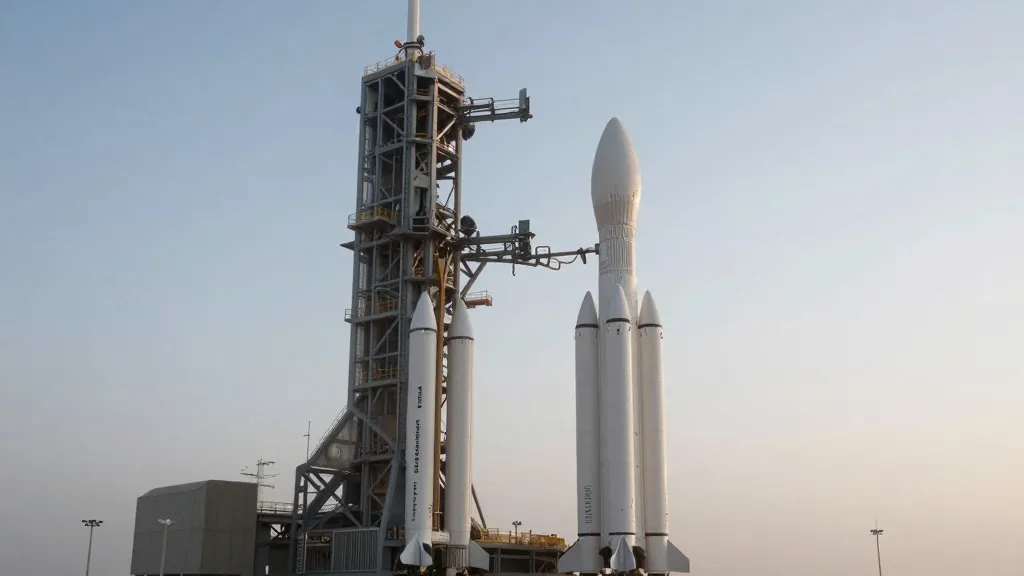
NASA has historically treated the specific number of rockets required to refuel its lunar lander as a closely held secret, much like the agency protects sensitive nuclear codes. This metric is central to the Artemis Program, which aims to return humans to the Moon. The figure in question represents the total launches needed to supply a Starship-based lander with enough liquid oxygen and methane propellant to travel to the Moon, land, and return to lunar orbit. For years, the agency has been reticent to provide a definitive answer, often citing uncertainty as the reason for their silence.
In recent years, the estimate has fluctuated significantly, creating a moving target for planners. In 2023, Lisa Watson-Morgan, who served as the director of NASA’s Human Landing System, expressed reluctance to provide an exact number. She told reporters that while the agency had a general idea, she was hesitant to commit to a specific figure. She later clarified that the number likely fell in the high single digits to the low double digits. This range suggested approximately a dozen launches, a substantial logistical undertaking that would require one depot ship and eleven tanker vessels to fully load the lander for its lunar voyage.
Other officials have previously suggested the number could be even higher, with some citing the high teens. The underlying hope was always that SpaceX would dramatically improve the lift capacity of the Starship vehicle. Such an improvement would reduce the number of required tanker flights, making the operation more efficient. However, a growing concern among NASA officials is that these capacity gains may not materialize soon enough to allow Starship to play a meaningful role in returning humans to the Moon within the current decade.
A new and more specific estimate emerged on Thursday during the quarterly meeting of the NASA Aerospace Safety Advisory Panel. Charlie Precourt, a former NASA astronaut and panel member, discussed the risks associated with the Artemis Program and the challenges of landing humans on the Moon. His remarks provided a clearer picture of the operational hurdles the agency faces as it moves forward with its lunar ambitions.
The shift toward a higher number reflects the complexity of assembling a large spacecraft in low-Earth orbit. Each additional launch adds cost, risk, and time to the overall mission timeline. For readers in the Pacific Northwest, where significant aerospace activity is centered, this development underscores the ongoing tension between ambitious space goals and the engineering realities of heavy-lift rockets. The agency must now balance its schedule against the technical limitations of its primary launch partner.
Looking ahead, the implications of this twenty-two launch estimate are significant. If the number holds, the Artemis timeline may face further pressure. NASA will likely need to explore options to streamline the refueling process or adjust its mission architecture. The coming months will be critical as the agency and SpaceX work to determine if technical improvements can lower this figure or if the agency must accept a more complex and lengthy operational sequence to achieve its lunar goals.
Source: Ars Technica