Democrats Win Congress, But Trump's $5,000 Dividend Promise Remains
Despite losing control of both chambers, the president's election-conditioned payout faces legal hurdles and bipartisan skepticism as the new Congress prepares to take office.
By Sanjay Caldwell ·

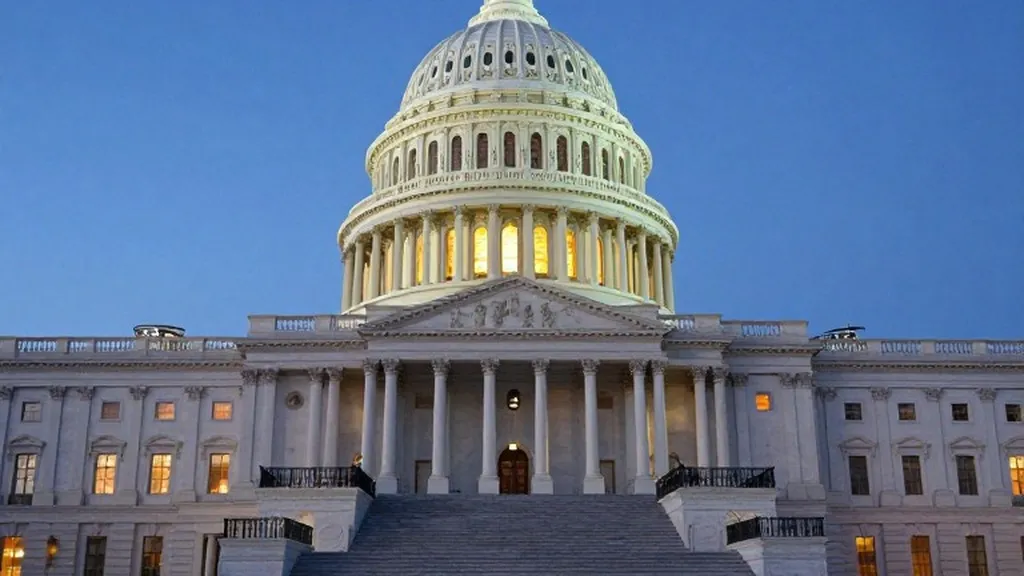
Voters delivered a decisive rebuke to the president's party on Tuesday, November 3, 2026, as Democrats secured majorities in both the U.S. House and Senate. The results, which saw Democrats gain at least 43 House seats and seven Senate seats, mark a significant shift in power that will define the administration's remaining two years. Despite this loss, the White House is still grappling with a bold financial promise made by President Donald Trump just days earlier. The president pledged a $5,000 "Trump dividend" to every adult American if Republicans retained control of Congress, a proposal that now faces uncertain legal and procedural hurdles.
Trump made the unusual pitch at the Republican Midterm Convention in Dallas last week, speaking to a crowd that he described as packed. He stated that if the Republicans won the House of Representatives and the United States Senate, he would issue a dividend to every adult citizen in the United States of America for $5,000. The president framed the payment as a reward for the nation's economic success, comparing the government's fiscal position to a successful company distributing cash to its shareholders. He emphasized that the United States is making so much money that such a payout is feasible, a claim that has drawn scrutiny from fiscal experts and lawmakers on both sides of the aisle.
The promise came with a clear condition that has now been broken by the electorate. Trump specified that the payment would go to every adult U.S. citizen, a definition that could exclude American citizens living abroad. Estimates suggest that giving each of the approximately 245 million U.S. citizen adults a $5,000 check would cost about $1.2 trillion. This massive expenditure would add to a national budget deficit that is already nearly $1.8 trillion annually. The timing of the announcement, just before a midterm election where economic affordability was a top concern, led to questions about whether the pledge was an attempt to buy votes from a skeptical base.
House Speaker Mike Johnson, who was reelected to his position before the Democrats took over the chamber, addressed the logistics of the proposal. Johnson stated that congressional approval is needed for the payments to go through. He described the idea as creative and pledged that Congress would work to find consensus on the issue. However, the new Democratic leadership is likely to scrutinize the spending closely. Democratic House leader Hakeem Jeffries, who is poised to become the nation's first Black House speaker, has already signaled that the new Congress will be aggressive in its oversight of the executive branch, potentially complicating any bipartisan efforts to fund the dividend.
Bipartisan criticism emerged even before the results were finalized. Some Republicans questioned the price tag and the precedent of tying a major financial benefit to an election outcome. Texas Congressman Chip Roy wrote on social media that dependency is evil and soul-sucking in all its forms, suggesting skepticism about the structural impact of the payout. Democrats argued that the promise was a last-ditch effort to energize turnout in a race that many saw as a referendum on the president's handling of the economy and foreign policy. The cost of living, a key issue for voters, remained a central theme as the electorate moved to the polls.
Legal experts have weighed in on the constitutionality of the promise. Rick Hasen, an election law professor at UCLA, noted that while the president does not have the unilateral power to enact such a payment, he would have a strong First Amendment defense if the promise were challenged. Hasen compared the pledge to other campaign promises, such as tax cuts or health care expansions, arguing that as long as the offer is public and given to every voter, it is part of standard campaign rhetoric. This legal standing does not, however, guarantee that the money will actually reach voters' bank accounts.
The funding source for the dividend has also been a point of contention. Trump and Vice President JD Vance cited tariff revenues as a potential source for the payments. However, the administration announced no formal plan for how the checks would be distributed or fully funded. The White House press release provided no details on the mechanics of the transfer. Fiscal experts point out that the U.S. is already running an unsustainable deficit, and adding $1.2 trillion in new spending could increase the odds of a debt crisis in the coming years. The reliance on tariff revenue is particularly complicated given that the Supreme Court recently struck down most of the president's earlier tariffs.
PolitiFact's analysis of the promise found that the biggest payment is far from certain. The fact-checkers noted that while the administration has announced no formal plan, fiscal experts cast doubt on the feasibility of the checks during a time of existing economic challenges. The payment would first require Congress' approval, and political analysts say such legislation is unlikely to attain the required 60-vote supermajority in the Senate, especially with Democrats now holding a 54-44 majority. The lack of a detailed roadmap from the White House has left many voters uncertain about whether they will actually see the money.
President Trump has defended his plan in interviews, telling reporters that the $5,000 is going to happen 100%. He argued that the United States can easily handle the cost because the country is taking in so much money from tariffs and other sources. However, consumer sentiment remains weak, with gasoline prices rising due to the war with Iran and wages struggling to keep pace with inflation. The president's confidence in the economy contrasts with the views of many voters who cited high prices and government corruption as crucial factors in their decision to support Democratic candidates.