Trump's $5,000 Dividend Vow Fades as Democrats Seize Congress
The president's Dallas promise to pay adults if Republicans kept power is now a historical footnote following a Democratic sweep of both chambers.
By Lucas Sheridan ·
President Donald Trump's campaign pledge to send $5,000 to every American adult if Republicans retained control of Congress has effectively expired following the party's loss of both chambers. The promise, dubbed the Trump dividend, was a central feature of the president's speech at the Republican Midterm Convention in Dallas, where he declared that voters would win with the party if they secured victories in the House and Senate. The White House framed the payment as a reward for the country's economic success, but the loss of the Republican majority in the November elections means the condition for the payout was not met.
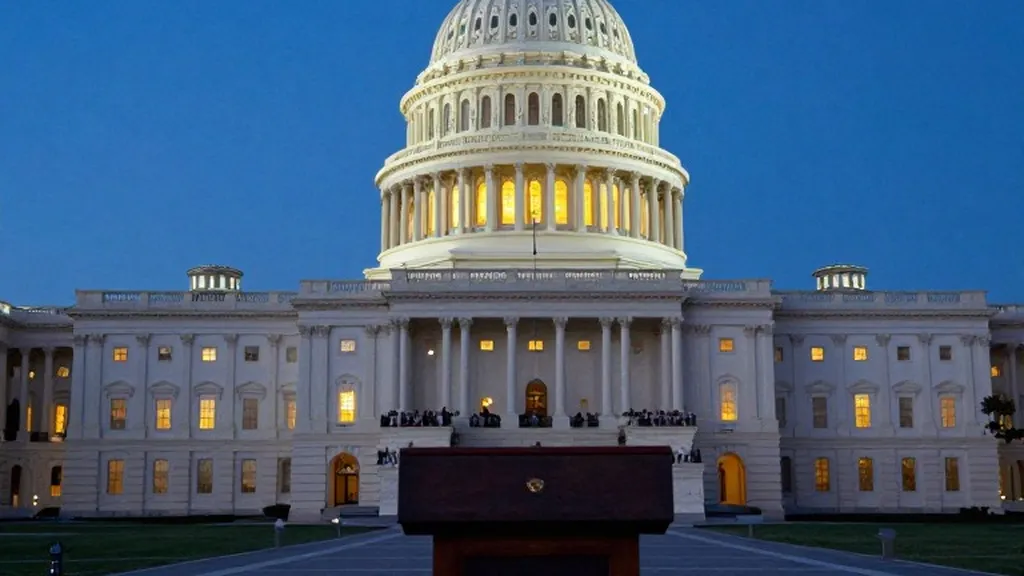
Democratic leaders are now positioned to scrutinize the administration's fiscal record, including the unfulfilled dividend promise. The party gained a net 41 seats in the House, securing a majority of at least 250 to 157, and flipped seven Senate seats to claim a 54 to 44 majority. This shift in power provides Democrats with the leverage to question the administration's spending priorities and the feasibility of large-scale cash transfers. The loss is particularly significant because it occurred despite a substantial financial advantage held by Republican-aligned groups, which spent roughly 60 percent more than their Democratic counterparts in the Senate race alone.
House Speaker Mike Johnson, who is expected to lose the gavel, had previously insisted that the dividend required congressional approval. He stated on Sunday before the election that he would assume the president needed Congress to act to make the payment a reality. Johnson pledged to work through the proposal despite the slim Republican margin they held at the time, describing it as a creative idea from the big ideas president. Now that Democrats control the legislative agenda, the path for such a bill to pass appears significantly more obstructed than Johnson's comments suggested.
Trump himself had expressed confidence in the plan's viability, telling reporters in Ireland that the 5,000s were going to happen 100 percent. He argued that the United States could easily handle the expense because of the high revenue generated by tariffs, claiming the country was taking in so much money that the payment was feasible. However, Vice President JD Vance indicated that the funds would come from tariff revenue, a source that fiscal experts noted was insufficient to cover the full cost of the program. The administration did not provide a detailed formal plan for how the checks would be distributed or funded beyond these general statements.
The potential cost of the dividend was estimated at more than $1 trillion, a figure that raised concerns about the national debt and inflation. Kenneth Rogoff, a former chief economist at the International Monetary Fund and a Harvard University economics professor, warned that the payment would exacerbate the unsustainable deficit and increase the odds of a debt crisis. The country was already facing a nearly $1.8 trillion annual budget deficit, and the new expenditure would have placed further strain on the economy at a time when consumer sentiment remained weak due to rising gas prices and the war in Iran.
PolitiFact analyzed the proposal and found that the biggest payment was far from certain, noting that the administration had announced no formal plan for the checks. The fact-checkers pointed out that while Trump cited tariff revenues as a potential funding source, lawmakers had not included a separate tariff dividend in the One Big Beautiful Bill Act that became law in 2025. Furthermore, political analysts noted that the legislation required to fund the proposal would likely struggle to attain the required 60-vote supermajority in the Senate, even under Republican control, let alone under the new Democratic majority.
Legal experts debated whether the promise constituted an attempt to buy votes, a common criticism during the campaign. Rick Hasen, an election law professor at UCLA, argued that the president would have a strong First Amendment defense, comparing the promise to other campaign pledges like tax cuts or healthcare expansions. Richard Painter, a government ethics expert at the University of Minnesota, agreed that candidates are allowed to make such promises, noting that voters can evaluate the feasibility of the pledge. Despite this legal validity, the bipartisan criticism of the price tag remained a significant theme in the final days of the campaign.
Texas Congressman Chip Roy, a Republican, questioned the logic of the payment on social media, writing that dependency is evil and soul-sucking in all its forms. His comments reflected a faction within the party that worried about the long-term fiscal implications of the dividend. Meanwhile, Democratic Sen. John Fetterman made a surprise video appearance at the Dallas convention, crossing party lines to emphasize commonsense governance, though he did not specifically address the dividend in that appearance. The contrast between the Republican promise and the Democratic platform of fiscal scrutiny has now become a key dynamic in the new Congress.
The election results also saw Democrats win full control of state governments in at least six states, including Arizona, Michigan, Minnesota, Pennsylvania, Nevada, and Wisconsin. This broad-based victory suggests that voters were motivated by cost-of-living concerns and dissatisfaction with the administration's handling of the Iran war and government spending. The loss of the House and Senate by the president's party is considered a wave election, placing the 2026 results in the top 20 percent of election years in terms of seat swings against a president's party.
Democrats will now hold the governor's office in at least 28 states, with results still pending in Alaska and Kansas. The new legislative majority in Congress will likely face immediate pressure to address the deficit and review the administration's spending priorities. The Trump dividend, once a headline-grabbing promise in Dallas, now serves as a case study in campaign rhetoric versus legislative reality. The administration's future proposals for direct payments to citizens will face a more skeptical Congress and a public that has already voted for a change in direction.