Israel's new taskmaster has 28 days
Gadi Eisenkot faces a tight deadline to unite a fractured opposition, requiring concessions from ultra-Orthodox groups and Arab parties that may demand more than he is willing to give.
By Sanjay Caldwell ·
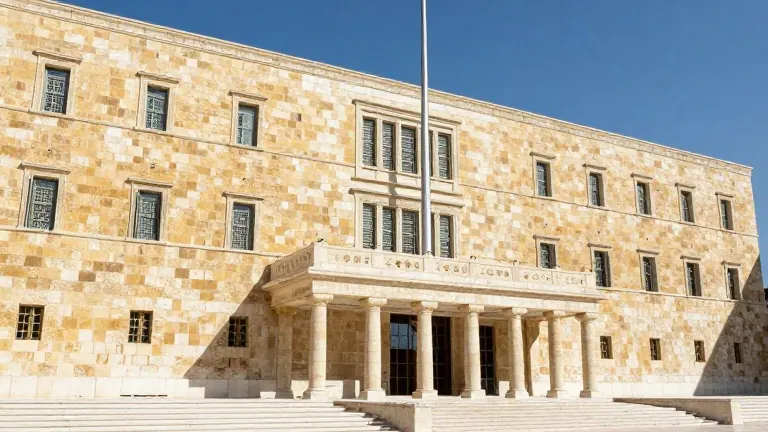
Israeli President Isaac Herzog has assigned Gadi Eisenkot the task of forming a new government, granting him a 28-day window to secure a parliamentary majority. If Eisenkot fails to build a coalition, Herzog may extend the deadline by 14 days. Should that second attempt also fail, the President is likely to turn to Prime Minister Benjamin Netanyahu. A subsequent failure by Netanyahu would trigger new national elections.
The mandate is complicated by the fragmented state of the opposition. Eisenkot assumed leadership of this divided bloc just days before the October 27 vote. To reach a governing majority, his Yashar party likely needs the endorsement of at least one ultra-Orthodox faction. He must also persuade right-wing allies in his coalition to accept external support from Arab parties without offering them cabinet seats.
Negotiations are already showing friction. United Torah Judaism has broken with its rival Shas by refusing to back Netanyahu. In doing so, it has positioned itself as a potential partner for Eisenkot, though its support likely hinges on preserving exemptions from military service for young men. Conversely, Palestinian-led parties are expected to demand concrete measures to combat violent crime in their communities and to halt settler attacks in the West Bank.
Aida Touma-Sliman, a legislator with the Joint List, observed that Eisenkot appears hesitant to rely on Palestinian voters. She noted that he seems more inclined to negotiate conscription rules with ultra-Orthodox groups than to formalize support from Arab parties. This reluctance creates a central obstacle in bridging the political gap between the bloc's constituents.
Eisenkot’s path is further complicated by shifting dynamics in the United States. Following wars in Gaza and Iran, President Donald Trump announced the end of Israel’s annual $3.8 billion military aid package before recent midterm elections. Republicans suffered major losses in that vote, with Vice President JD Vance citing the Iran war as a factor. Aaron David Miller of the Carnegie Endowment described the American political environment as exceptionally difficult for the incoming leader.
Eisenkot brings a distinct military and personal history to the role. A former chief of staff who grew up in Eilat, he joined the national unity government established after the October 7, 2023 attacks. He has also suffered personal losses during the Gaza war, including the deaths of his son Gal and two nephews. Yossi Mekelberg of Chatham House characterized Eisenkot as a steady figure who emphasizes equal application of rules.
Critics point to his military record, specifically the Dahiyeh Doctrine, which advocates disproportionate force against civilian communities. UN figures recorded approximately 650 Palestinian deaths between 2015 and 2018, a period overlapping his command. A UN commission found reasonable grounds to believe forces under his leadership committed serious international law violations, with 189 Palestinians killed during the 2018 Great March of Return protests, including 35 children.