Midterm Shifts: Democrats Claim Senate Control Through Youth and Independent Gains
Polls show decisive swings among voters under 30 and independents in key states, including Georgia, Ohio, and Kansas, contributing to a Democratic majority.
By Sanjay Caldwell ·
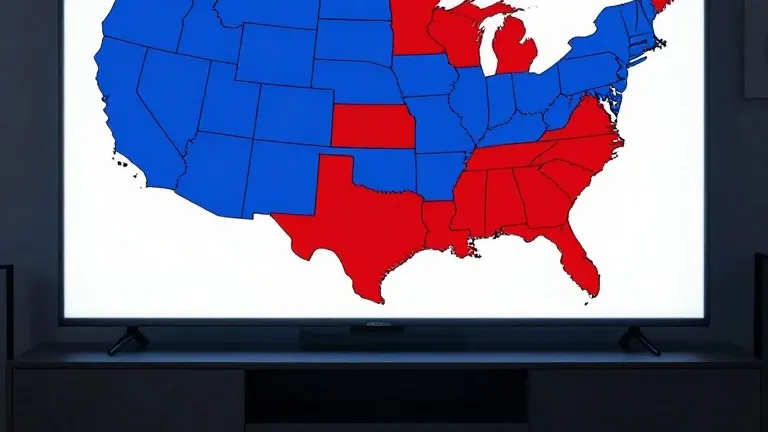
For voters in states from Georgia to Kansas, the 2026 Senate elections delivered a stark change in representation. Democrats are projected to reclaim control of the U.S. Senate, a result driven by substantial increases in support from younger voters and independents in districts that previously favored Republicans. The shift was evident in races where candidates won margins that analysts described as unexpected just two years ago.
In Georgia, Jon Ossoff is projected to win reelection with the support of approximately 60% of voters. His victory was fueled by a surge among voters under 30, whose support for Democrats widened from a 21-point margin in 2022 to a 69-point margin in 2026. Ossoff also improved his standing with white voters, winning 39% of their support compared to the 29% his predecessor received in 2022. Among independents, who comprise roughly 30% of the electorate, about 60% voted for Ossoff over Republican challenger Collins.
Similar patterns emerged in Ohio, where Sherrod Brown is projected to defeat John Husted. Brown won voters under 30 by more than 40 percentage points, reversing a trend from 2024 when that group supported the Republican candidate. He also secured the support of independents by 26 points and won female voters by roughly 15 points. While he lost the male vote by a narrow margin, his performance among white voters returned to levels last seen in the 2018 midterms, with the group breaking nearly evenly between the two candidates.
In Kansas, Adam Hamilton is projected to become the first Democrat elected to the Senate from the state since 1932. He defeated incumbent Roger Marshall by capitalizing on dissatisfaction with the national political direction. About 40% of Kansas voters said they were angry about how things are going in the country, and those voters supported Hamilton over Marshall by roughly an 80-point margin. While over 80% of Republicans voted for Marshall, 12% of that group crossed over to support Hamilton. Independents split for Hamilton by a margin of more than two to one.
The results reflect a broader trend of economic discontent influencing the vote. In Ohio, a majority of voters blamed President Donald Trump for high costs and his tariffs. In South Carolina, Annie Andrews is projected to defeat Darline Graham, with support from college graduates and suburban voters who shifted away from the Republican Party compared to 2022. In Iowa, Josh Turek is projected to win, becoming the first Democrat to represent the state in the upper chamber since 2008, aided by strong support from independents and voters aged 18 to 29.
These victories align with polling data showing high levels of dissatisfaction with the current economic conditions. In Georgia, about 75% of Senate voters rated the economy negatively, and roughly 90% of those who described the economy as poor voted for the Democratic candidate. In Kansas, nearly 60% of voters disapproved of Trump’s handling of his job as president. The data indicates that voters who expressed anger about the nation’s state of affairs or disapproved of the president overwhelmingly backed the Democratic candidates in these contested seats.