Nvidia's new robot training system relies on Chinese mechanical hands
The Agile One SN hardware, unveiled in Berlin, pairs an Agile Robots body with Wuji Hands, marking a second time in months Nvidia has featured Shanghai-founded dexterous actuators in its humanoid roadmap.
By Lucas Sheridan ·
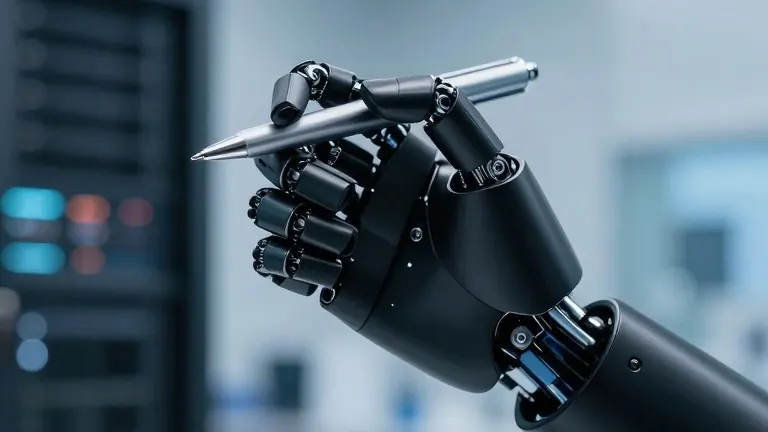
Nvidia is leaning on Chinese manufacturing to solve one of the most difficult problems in humanoid robotics: dexterity. On Oct. 21, the company presented a new hardware system called Agile One SN to an audience in Berlin. The setup features a robot body built by Agile Robots and mechanical hands produced by Wuji. This marks the second time in recent months that Nvidia has showcased a training package relying on actuators developed by startups with deep roots in Shanghai.
Jensen Huang, Nvidia's CEO, described the new system as a flywheel for accelerating robotics development. The platform utilizes Nvidia's Isaac robotics software and the Jetson Thor computing unit. Agile Robots maintains offices in Germany, China, and the United States. Nvidia stated that research institutions, including Stanford and ETH Zurich, could begin utilizing the Agile One SN in early 2027. These same institutions were named in May as early users of Nvidia's first reference humanoid design, which pairs a Unitree body with Sharpa hands. That initial system was scheduled for delivery from late 2026, though Nvidia did not immediately confirm if those shipments have begun.
Wuji, founded by Pan Yunzhe in 2019, moved much of its team to Shenzhen and attracted investment from Ant Group, HSG, and Future Capital. A demo video released last week showed the Wuji Hand 2 spinning a pen autonomously while under interference. Sharpa, the other key partner, is headquartered in Singapore but co-founded by David Li, who leads Hesai, a Shanghai-based lidar company. Sharpa states its manufacturing research and development is located in Shanghai.
Industry figures suggest that hand performance remains the primary bottleneck for humanoid progress. Zhu Mingxuan, a humanoid startup founder who previously worked at Figure, told CNBC in September that Wuji's hands are light and effective at completing tasks but tend to overheat. She noted that Sharpa's hands perform better but come at a significantly higher price point. Keerthana Gopalakrishnan, a research lead at Google DeepMind, compared the two startups on a podcast last month. She stated that Sharpa Wave is slightly stronger than Wuji, which she described as being closer in size to a human hand but possessing the strength of a ten-year-old. It was unclear if she was testing the latest Wuji Hand 2 model or an earlier version.
Other major tech firms are also integrating Chinese hardware into their humanoid prototypes. Meta has collaborated with Chinese startup Fourier on a humanoid design, according to a report by The Information on Oct. 31. Neither company immediately responded to requests for comment. Xiaomi announced last week that its own robotic hand tests in a car factory revealed that most tasks require only a specific range of movement. These developments occur as China pushes its humanoid industry to develop more core technologies to stand out in the global robot race.