Rubio defends Trump's foreign policy direction after GOP midterm losses
The Secretary of State told G7 peers in Paris that the president remains the primary architect of U.S. diplomacy despite Democratic control of Congress.
By Sanjay Caldwell ·
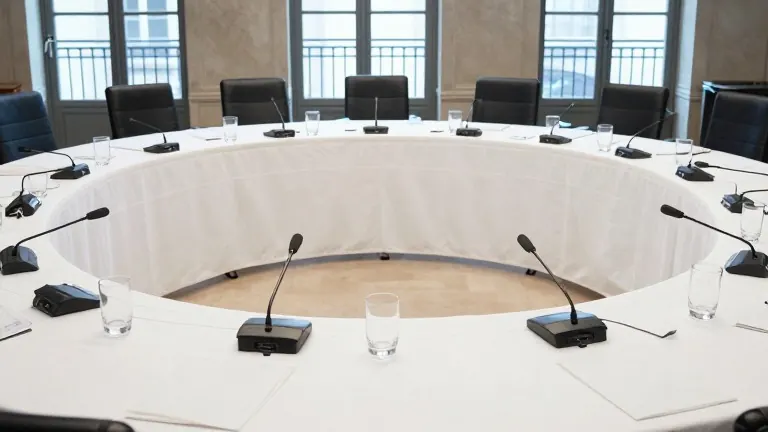
Secretary of State Marco Rubio asserted that President Donald Trump will not alter his international strategy following the Republican defeat in the November midterm elections. Speaking in Paris, Rubio confirmed that the White House retains primary control over foreign policy decisions, even as Democrats now hold the majority in both chambers of Congress.
Rubio acknowledged that the legislative branch retains authority over government funding and oversight. However, he stated that the president remains the number one factor in determining the nation's approach to global affairs. "The Congress has a role to play in our foreign policy, particularly in what it finances and in its oversight function, but the number one factor in determining foreign policy has always been and will continue to be the president," he told reporters.
This marks the first major statement from the U.S. chief diplomat abroad since the electoral results were tallied. The Republican loss was widely interpreted as a public rejection of various administration actions, including the war with Iran. Rubio maintained that the administration intends to pursue solutions for international conflicts while adhering to the "America First" principle, a stance that has created friction with key allies.
Tensions emerged during the G7 meeting involving the United States, United Kingdom, Canada, France, Germany, Italy, and Japan. Disagreements centered on the wars in Ukraine and Iran, as well as the jurisdiction of the International Criminal Court. Regarding Ukraine, Rubio defended continued U.S. efforts to reach a deal despite stalled talks in Abu Dhabi involving envoys Steve Witkoff and Jared Kushner.
German Foreign Minister Johann Wadephul warned that Europe must participate in any negotiations, while French Minister Jean-Noel Barrot argued that ending the war must be the immediate priority. On Iran, Rubio described some diplomatic demands from Tehran as unacceptable and unrealistic. He noted that the conflict continues to impact fuel prices and strategic maritime routes.
In a separate matter, Rubio praised the continued presence of Venezuelan opposition leader Maria Corina Machado in her home country. Machado returned on October 25 and has not been arrested. Rubio outlined a U.S. supported roadmap that includes renewing the Venezuelan Supreme Court by mid-December and establishing a new electoral council. Under this plan, Delcy Rodriguez would declare the presidency vacant to begin a six month period leading to new elections. The administration has not yet determined how the more than seven million Venezuelans living abroad, including those in the United States, will cast their ballots.