UAE adviser warns military options offer no quick exit from Iran conflict
Diplomats in Bahrain argue that reopening the Strait of Hormuz requires political wisdom rather than further strikes, even as Gulf nations brace for potential escalation.
By Sanjay Caldwell ·
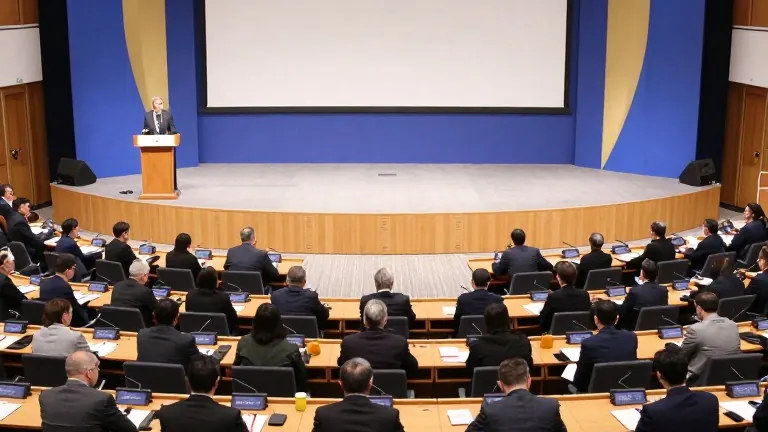
Anwar Gargash, the presidential adviser to the United Arab Emirates, told a crowd in Manama on Sunday that relying on military force will not solve the current standoff with Iran. Speaking at the Manama Dialogue, Gargash argued that political tools must remain the primary method for navigating the crisis. He warned that adding more military solutions would complicate an already difficult situation without providing a fast way out.
The tension stems from a conflict that erupted on Feb. 28 with joint strikes by the United States and Israel. Iran responded with attacks on Gulf nations, a sequence of events Gargash described as a watershed year for the region. The UAE presidential adviser stated that his country hopes for a diplomatic breakthrough to prevent another round of direct confrontation. He noted that while the positions of Washington and Tehran are far apart, bridging that gap is essential to avoid the worst-case scenario.
Negotiations are currently taking place in Qatar, where Iranian officials are discussing a proposal to reopen the Strait of Hormuz. Iranian Foreign Minister Abbas Araghchi said in an interview shared on Telegram that Iran prefers diplomacy but is prepared for defense if Washington acts irrationally. Araghchi clarified that no direct talks are happening between Iran and the U.S. right now, and that the outcome depends on how the United States answers specific Iranian questions.
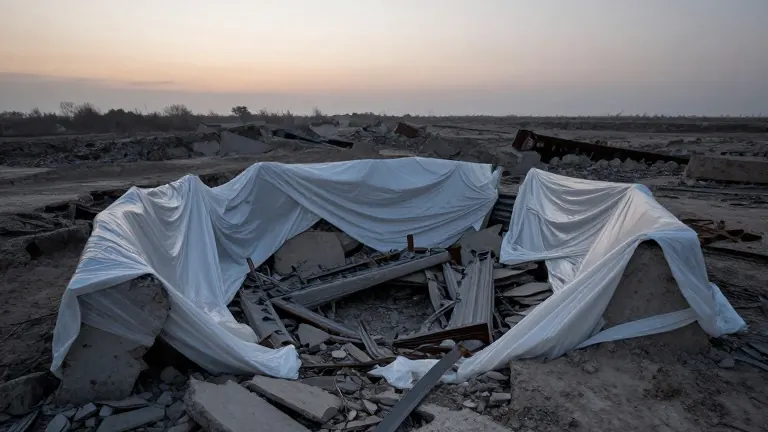
The three-day security summit in Bahrain’s capital cast a shadow over the proceedings, with attendees bracing for possible escalation. Before the April ceasefire, the UAE faced the heaviest bombardment of any nation in the region. According to the International Institute for Strategic Studies, Iran launched more than 3,000 drone and ballistic missile attacks against UAE airports, military bases, and oil facilities. Most of those projectiles were intercepted, but the scale of the assault drove Gulf states to spend billions of dollars strengthening their defense capabilities this year.
Bahraini Foreign Affairs Minister Abdullatif bin Rashid Al Zayani joined Gargash in calling for dialogue. He criticized Iran for a continued pattern of threats that target sea, air, and data infrastructure. Al Zayani pointed out that these threats persisted even after the ceasefire, including recent warnings about underwater data cables. He also linked attacks by Iran-backed Houthi rebels on Saudi Arabia to this broader strategy, stating that while the actors may change, the approach remains consistent.
The war has also reshaped regional alliances. Gargash said the conflict has solidified the relationship between the U.S. and the UAE, making the partnership more important than ever for the emirate’s self-defense. At the height of the fighting, Iran fired 500 drones and nearly 200 ballistic missiles at Bahrain, home to the U.S. Navy’s 5th Fleet. Those attacks struck the naval base, residential areas, the financial district, and a water desalination plant. This summer, Houthi rebels escalated their campaign against Saudi oil infrastructure and airports, disrupting air traffic and hitting critical pipelines in response to Saudi airstrikes in Sanaa.