Texas officials vow to ban Sharia as Muslim voters organize for midterms
State leaders have adopted aggressive anti-Islamic platforms while community groups push for higher turnout before the November 3 election.
By Sanjay Caldwell ·
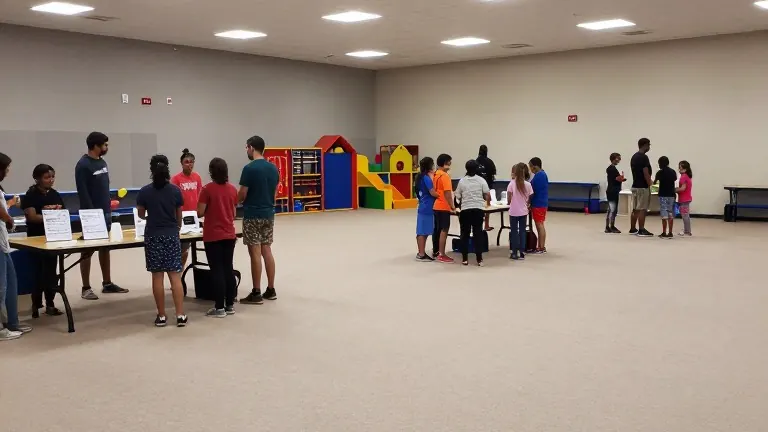
Rain threatened to dampen the mood at a local Islamic center in Houston just days before the November 3 vote, but families arrived in droves for a final community celebration.
The event served as a rally point for Muslim voters in Texas, a state where political rhetoric has intensified against the faith. While national attention often focuses on Muslim candidates in other states, local residents described a years long buildup of stigma that has made the upcoming midterms feel personal.
State Republican leaders have centered their messaging on the concept of Sharia, a broad term for Islamic customs, arguing it poses an immediate threat to Texas. Governor Greg Abbott declared at the Republican Midterm Convention in Dallas last month that the state would fully ban Sharia law. Senator Ted Cruz joined the effort, stating that Sharia law is fundamentally inconsistent with the Constitution.
In June, the state Republican party adopted a platform titled Don't Sharia my Texas. The document vows criminal punishment, disqualification for public and military service, denaturalization, and deportation for proponents of Islamic law. Texas legislators also launched a Sharia Free Texas Caucus in March, which now includes 38 members of the 150 seat chamber. This follows the creation of a Sharia Free America Caucus in Congress by two Texas representatives, a group that has grown to 68 members.
Residents described the political climate as exhausting. Mariam Ahmed, a 42 year old physician in Houston, said she contemplated leaving the United States within the last two years. She expressed concern that her child would be viewed as a terrorist, a dynamic she has already experienced herself. Samir Nadjam, a 45 year old lawyer, noted that the tension is most visible through his children, who interact with peers from families that consume specific political news.
Community organizers are working to counter the narrative by driving voter registration. Emran Gazi, president of the Islamic Society of Greater Houston, said the group expanded its registration drives and urged members to vote their conscience during Friday prayers. He stated the goal is to ensure politicians factor Muslims into their decision making. Muslims make up less than two percent of the Texas population, but organizers hope a surge in turnout will demonstrate electoral strength.
The political friction has also affected Muslim Republicans in the state. At the June Republican Party of Texas Convention, outgoing party chair Abraham George told two Muslim delegates they should leave the party. A state senator told a panel that Muslims were required by Sharia to lie. Governor Abbott has sought to designate the Council on American Islamic Relations as a foreign terrorist organization, while Attorney General Ken Paxton has sued the group to force it to stop operating in Texas. CAIR Texas has countersued Abbott on freedom of speech grounds.
Sarah Dabbas, a 33 year old physician who recently moved to Houston, said the emphasis on Islamic law is baffling because no jurisdiction in the United States has enacted such laws. She noted that the political framing treats ordinary civic participation as evidence of a threat. The Bridge Initiative, a Georgetown University based tracker, reported that state politicians increasingly point to demographic growth and community development as signs of encroachment.
Organizers face challenges in mobilizing a diverse community that includes speakers of many different languages. Sania Rahim of the Coalition for Peace, Relief, and Equity noted that Muslim voters have historically engaged more in local politics than statewide races. However, a recent Texas Board of Education curriculum approval that critics say misportrays the prophet Muhammad has energized many in the community.
Sameeha Rizvi, a civic engagement organizer for CAIR, stood near bounce houses and food vendors at the Houston event. She told the crowd that changing the state requires voting in this election. She urged those who were registered but had not yet cast a ballot to take action before the polls closed.