Trump's $5,000 Dividend Now Unfunded as Democrats Take Congress
The president's election-year promise to pay adults $5,000 was conditioned on GOP control, a condition no longer met, leaving the $1.2 trillion pledge in political and fiscal limbo.
By Sanjay Caldwell ·
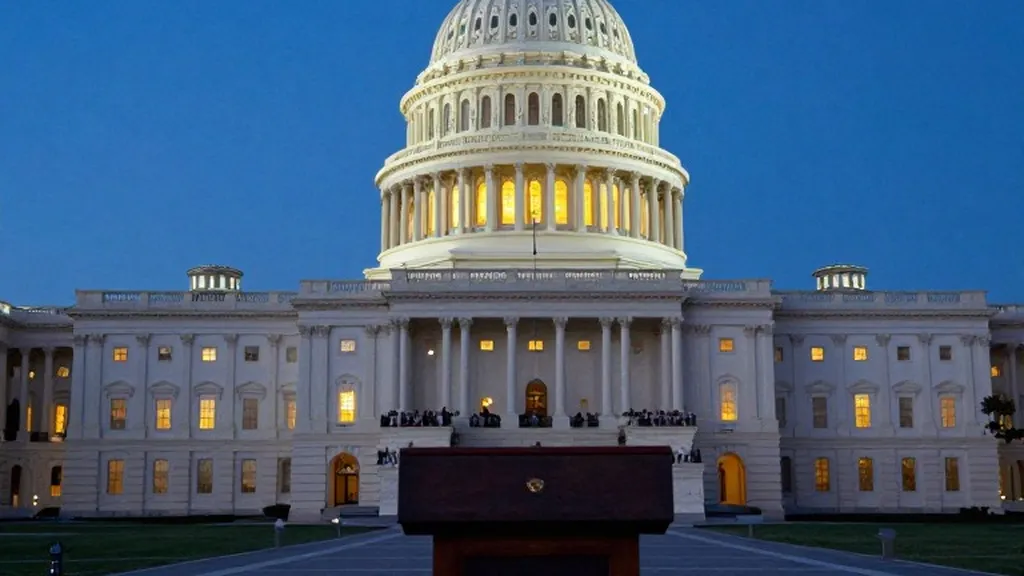
President Donald Trump’s campaign promise to send every American adult a $5,000 check has effectively collapsed following the November 3 midterm elections, in which Democrats captured majorities in both the U.S. House and Senate. The pledge, known as the "Trump Dividend," was explicitly conditioned on the Republican Party retaining control of Congress. With Republicans losing at least 43 House seats and seven Senate seats, the central trigger for the payment no longer exists, leaving the administration to explain how it will deliver on a commitment that could cost the federal treasury more than $1.2 trillion.
During the Republican Midterm Convention in Dallas, Trump addressed a large crowd and made the unusual pitch. He stated that if Republicans won the House and the Senate, voters would receive a $5,000 dividend due to the country's tremendous economic success. He compared the move to corporations distributing cash to shareholders. At the time, the White House argued that tariff revenues would help fund the payments, a rationale that fiscal experts have long questioned given the scale of the debt.
Speaker Mike Johnson, R-La., acknowledged the complexity of the promise just days before the election. He said that he assumed Trump would need Congress to act to make the checks a reality. Johnson pledged to work through the proposal if Republicans held power, calling it a creative idea. However, with Democrats now controlling the legislative branch, Johnson’s path to enacting the dividend has been blocked by the party that did not make the promise.
Democratic leaders are already signaling that the dividend will not be a priority in the new Congress. Rep. Robert Garcia, who is poised to chair the House Oversight Committee, has framed the new session as a time to investigate the executive branch rather than fund new spending. Hakeem Jeffries, the Democratic House leader, emphasized that the party’s mandate is to lower the cost of living and hold the administration accountable. The focus on oversight suggests that the $5,000 check will likely become a subject of inquiry rather than a line item in the budget.
PolitiFact’s analysis from the weeks before the election found that the $5,000 payment was far from certain even if Republicans had won. The fact-checkers noted that the administration had announced no formal plan for the checks. They highlighted that the payment would require a 60-vote supermajority in the Senate to overcome potential procedural hurdles, a threshold that was difficult to reach even when Republicans held the chamber. The analysis also pointed out that the money would significantly increase the national deficit, which was already nearly $1.8 trillion annually.
Vice President JD Vance had told Fox News that some of the money would come from tariff revenue. However, the Tax Foundation estimated that the cost of the $5,000 checks would spend almost all the revenue that new tariffs were projected to bring in over a decade. Erica York, a senior economist at the Tax Foundation, wrote that the plan was unlikely to happen, citing the unsustainable deficit. The Supreme Court had recently struck down most of Trump’s earlier tariffs, complicating the revenue stream the administration relied on for its fiscal arguments.
Texas Congressman Chip Roy, a Republican, offered early criticism of the plan, writing on social media that dependency is evil and soul-sucking in all its forms. His comments reflected a faction within the GOP that viewed the dividend as an expansion of government rather than a reward for voters. This internal party debate became moot as the election results shifted power to the Democrats, who now control the purse strings.
The promise of the dividend was part of a broader strategy to energize the base and distract from economic concerns. Trump’s approval rating was low in the weeks leading up to the election, with only one-third of U.S. adults approving of his handling of the presidency. The AP Voter Poll found that about three-quarters of voters felt angry or dissatisfied with the country's trajectory, with inflation and the cost of living cited as crucial issues. The dividend was an attempt to offer a tangible benefit to offset these frustrations.
Democratic Sen. John Fetterman made a surprise video appearance at the Dallas convention, where he described himself as a commonsense Democrat who would work with Trump. However, the main Democratic platform in the new Congress focuses on aggressive investigations and reversing executive actions. The investigative blitz is expected to begin soon, with Democrats preparing to look into the administration's handling of the Iran war and other executive overreach. The $5,000 dividend may become a test case for how hard the new Congress presses the White House on its spending claims.
The White House has maintained that the payments are possible because the U.S. economy is strong. Trump told reporters that the country is taking in so much money that it can easily handle the dividend. He predicted that gas prices would drop and that the results of his economic policies would be better than expected. However, consumer sentiment remains weak, and wages have struggled to keep pace with inflation. The new Democratic Congress is likely to scrutinize these claims as they take office in January.
Speaker Johnson said that he would commit to finding consensus on the dividend if his party had won. Now, with Democrats in control, the onus shifts to the House and Senate leadership to determine whether they will force the issue or let the promise fade into the political record. The dividend was a unique election-year gambit that tested the boundaries of campaign rhetoric and fiscal policy. Its fate in the new Congress will be a defining moment for the administration's remaining two years in office.