Federal Courts Intervene in 2026 Midterm Voting Rules and Postal Measures
Judicial orders in California and Alaska halted specific federal efforts to manage noncitizen voting, while the Postal Service expanded operations to ensure timely mail ballot processing.
By Takeshi Faure ·
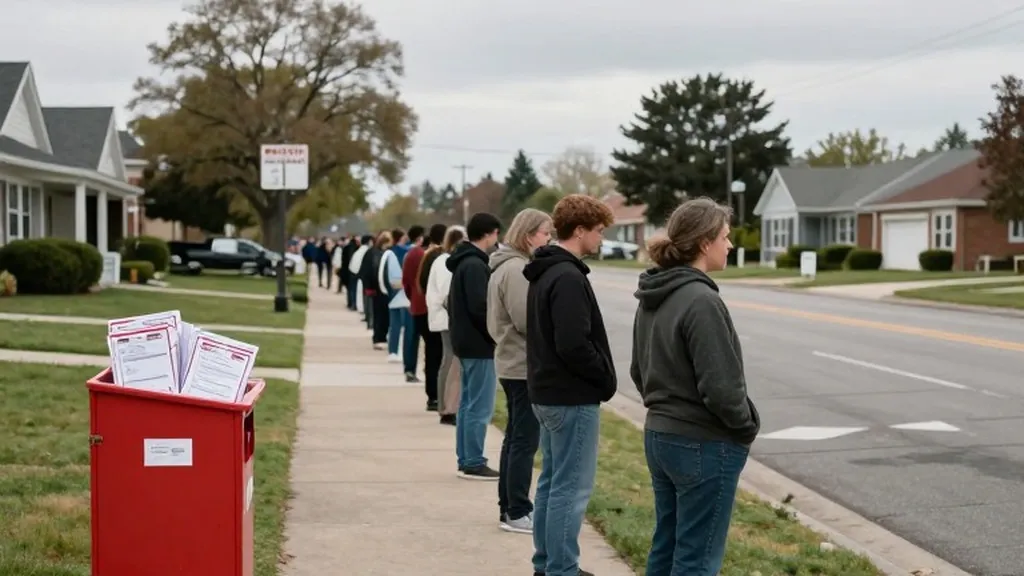
On Tuesday, November 3, 2026, American voters are heading to the polls for the midterm elections, a contest that will determine which party controls Congress for the final two years of President Donald Trump's second term. While voters focus on economic pressures and foreign policy, a series of legal rulings and administrative measures are shaping the mechanics of the election. Federal courts have stepped in to pause specific executive actions regarding noncitizen voting, creating a complex backdrop for what the Associated Press describes as a referendum on the current administration.
The most significant legal development occurred on Monday when a federal judge temporarily barred the Trump administration from implementing a plan designed to prevent noncitizen voting. Critics of the plan argued that it risked disenfranchising eligible voters and infringed upon the traditional authority of states over their own election processes. This temporary restraining order places a hold on federal efforts to enforce stricter identification and citizenship verification requirements at the polling place, allowing local election officials to proceed with their standard procedures.
In a parallel legal move, a judge ordered the administration to stop demanding that California election officials segregate ballots cast by individuals listed on federal databases of suspected noncitizens. This ruling specifically addresses a directive that would have required California to physically separate these ballots for potential later review. The order provides relief to California election administrators who feared that the segregation process could lead to delays or confusion in the counting of votes on a largely mail-based election day.
These judicial interventions are part of a broader legal strategy by the administration, which has filed lawsuits in both Alaska and California related to the certification of election results and voting procedures. In Alaska, the Trump administration filed a lawsuit concerning the certification of the Senate race result, adding another layer of legal scrutiny to a state that is currently rated as a toss-up or leaning Democratic in the race between incumbent Dan Sullivan and the Democratic challenger. Democrats have expressed concern that these legal actions, combined with Justice Department threats to prosecute local election officials, could create an atmosphere of interference and intimidation.
The U.S. Postal Service has responded to the high volume of mail-in ballots by adding extra hours, increasing staff levels, and establishing special processing lines. These measures are intended to ensure that mail ballots are counted on time and that the postal system can handle the logistical burden of the midterm cycle. This operational expansion is critical for states that rely heavily on mail voting, including California, Colorado, Hawaii, Nevada, Oregon, Utah, Vermont, and Washington, where mail ballots constitute a significant portion of the total vote.
The legal and administrative adjustments come as more than 57 million people have already cast their ballots, surpassing early vote totals from four years ago in many closely watched states. The Associated Press notes that voters are struggling with high prices and are angry over an unpopular war with Iran. Recent polling from AP-NORC indicates that 35% of U.S. adults approve of President Trump's job performance, while about seven in 10 say the country is heading in the wrong direction. These economic and policy concerns are driving voter turnout in a year where the stakes are high for both chambers of Congress.
In the House, all 435 seats are up for election, with Democrats needing a net gain of three districts to achieve a majority. Republicans can afford to lose no more than two seats. Ballotpedia identifies 46 battleground districts, including 25 held by Democrats and 21 by Republicans. The Senate race is equally tight, with 35 seats in play. Democrats need a net gain of four seats to take control, while Republicans can lose only two. The outcome will determine the balance of power for oversight investigations and potential impeachment proceedings if Democrats take either chamber.
Governor races in 36 states are also on the ballot, with Republicans holding 26 offices and Democrats holding 24. Democrats are attempting to secure a nationwide majority of governorships for the first time since 2010. Key contests include Georgia, where Republican Rick Jackson faces Democratic former Atlanta Mayor Keisha Lance Bottoms, and Ohio, where Republican Vivek Ramaswamy faces Democrat Amy Acton. The Associated Press highlights that the election is being watched closely for its impact on the 2028 presidential field and the administration's ability to enact its agenda in the final two years of the term.
The financial landscape of the election reflects the intensity of the contest, with the 2026 elections likely to be the most expensive in history. Republican committees have outraised and outspent Democratic committees at the national level, aided by Trump-affiliated groups and significant contributions from Elon Musk. However, at the candidate level, Democrats have managed to outraise their opponents. The Associated Press analysis of advertising data shows that 88.1% of Republican general election TV ad spending has gone to states and districts that Trump won in 2024, including areas where his margin was more than 10 points.
As polls open across the country, from 6 a.m. in some states to 8 a.m. in others, election officials are managing the final logistics of the day. The temporary legal pauses on federal voting initiatives allow local jurisdictions to maintain their established protocols for voter identification and ballot handling. The Postal Service's expanded operations are critical for processing the surge in mail ballots, ensuring that every eligible vote is counted within the legal timeframe. The combination of these administrative and legal factors will influence the speed and clarity of the final results as the nation awaits the outcome of the midterms.